October 30, 2026

Keys seem simple enough. Give one to each employee and they can get into the building. But what happens when someone loses a key or leaves the job without returning it? You may need to change the locks. That costs money and takes time. When looking at Access Control vs. Traditional Keys, these small problems are worth thinking about.
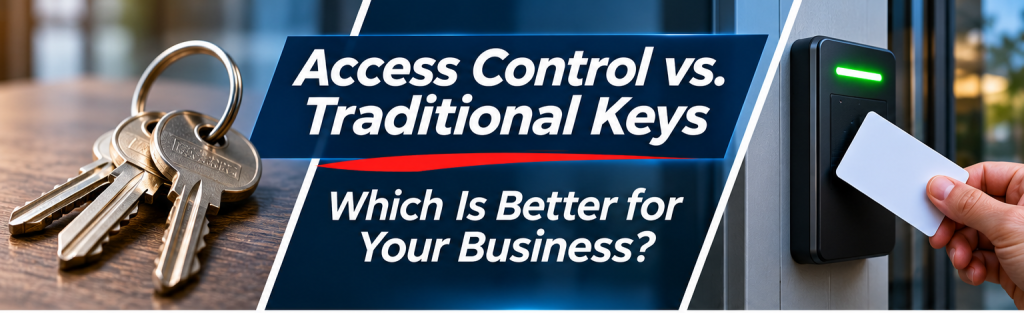
Traditional locks work with physical keys. Anyone who has a working key can usually open the door. You cannot easily tell who used it or when.
Electronic access control works with keycards, PINs, fobs or mobile devices. You can decide who gets access and remove their permission when they no longer need it. Some systems also keep entry records. The setup depends on the equipment you choose.
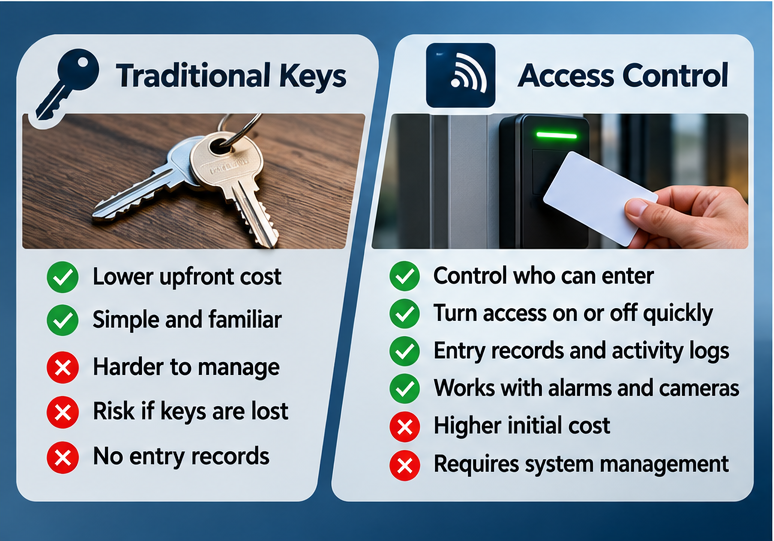
Traditional locks are usually cheaper to install. They don’t need electricity or a network to work. For a small shop or office with just a few doors, this may be enough.
The trouble comes when keys go missing. Someone might find one and use it. If a former employee still has a key, you may have little choice but to change the lock.
Electronic systems make it easier to manage staff access. Lost a card? You can usually turn it off without replacing the lock. Some systems can also work with security cameras and alarms, which may be useful for a busy workplace.
Of course, electronic locks aren’t perfect. They cost more to install, and you may have to pay for upkeep or software. Someone also needs to manage the system properly. Otherwise, small mistakes can leave doors less secure than they should be.
It really comes down to who needs to enter and which rooms they should use. With electronic access, you can give staff permission to enter the main office but keep the stockroom locked to them. If someone’s role changes, you can update their access.
With ordinary keys, things are less flexible. You may need extra locks or other rules to keep certain rooms off limits.
There are also rules and guidelines to consider. NIST’s physical access control guidance explains how access permissions, entry records and physical credentials can be managed. It is guidance for assessed systems, though, not a rule that every small business must follow.
And don’t forget the emergency exits. In a fire or another emergency, people need to get out quickly. OSHA’s exit route rules say that applicable exit doors must open from inside without a key, tool or special knowledge. Whatever system you install, people must be able to leave safely.
Traditional locks usually cost less at the beginning. But replacing keys and changing locks can add up, especially when employees leave regularly.
Commercial access control systems cost more upfront. They may need card readers, controllers, wiring and other equipment. For a large office or a building with restricted rooms, that extra cost may be worth it.
Look at the full cost, not just the installation bill. Maintenance, software and future changes can affect your budget.
For more ideas, read Hawk Security Systems’ guide to essential security systems for retail businesses.
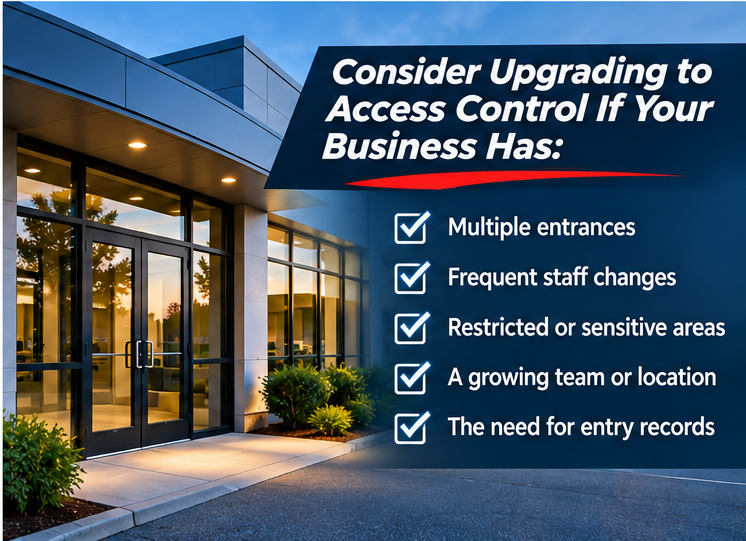
Think about an upgrade if your business has several entrances, frequent staff changes or rooms that only certain people should enter. Keyless entry for businesses can make daily access easier to manage.
You don’t have to replace every lock. Some businesses use electronic access control at the main entrance and keep traditional locks on less-used doors. Professional access control installation can help you decide which setup suits your building.
Hawk Security Systems provides commercial access control and related security services across Virginia and West Virginia. You can also explore its integrated business security solutions.
It can give you more control over who enters. But the system still needs proper setup and management.
That depends on the equipment and its backup power. Ask the installer how it handles outages.
Yes. You can use electronic access at busy entrances and traditional locks on other doors.
Messages sent through this form are typically addressed within 1 business day.
If you need immediate assistance with your security equipment, we ask that you call us at 800-729-4295.
Messages sent through this form are typically addressed within 1 business day.
If you need immediate assistance with your security equipment, we ask that you call us at 800-729-4295.

